“The distinction between the past, present, and future is only a stubbornly persistent illusion.”
Dark opens with this quote from Albert Einstein. It’s an excerpt from a letter Einstein wrote after learning of the death of his good friend and collaborator Michele Besso; it was meant to help Besso’s family cope with their loss. The first episode of Dark, “Secrets,” shows how relevant the quote is to the series as a whole.
The streaming TV era has brought us many odd pleasures, and here’s one of them: a supernatural drama with the budget and global fanbase to go properly berserk. Dark, a German original drama for Netflix, sets itself in Winden, a small community deep in the dark woods.
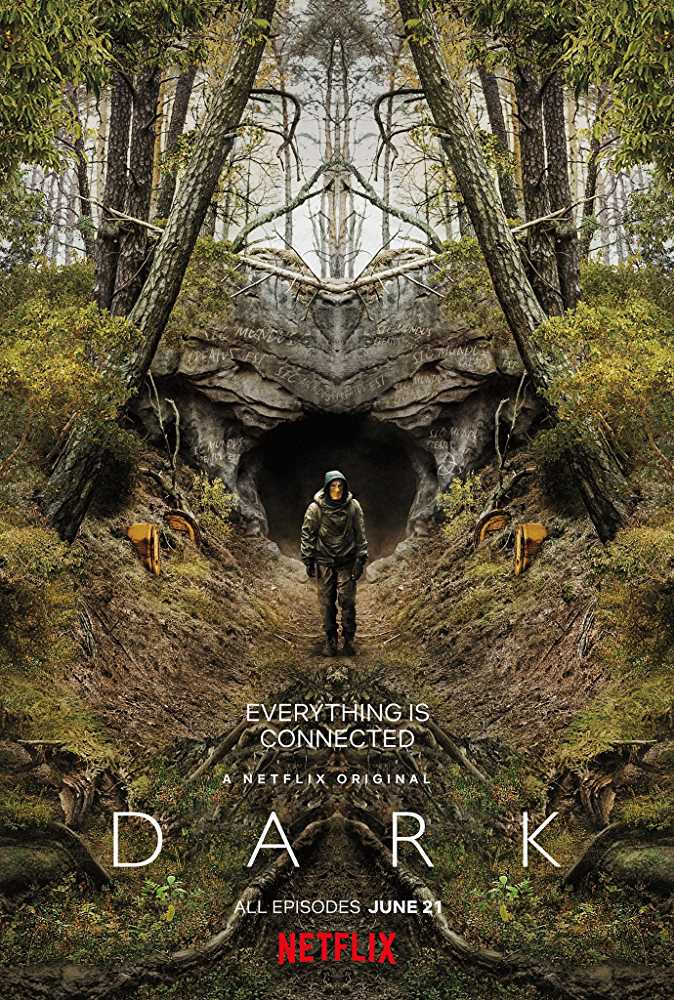
It’s 2019 and the people of Winden are concerned about the recent disappearance of a teenager named Erik Obendorf. Another teenager named Jonas Kahnwald is coping with the recent suicide of his father Michael. His mother seems to have moved on somewhat—she’s having an affair with the married police officer Ulrich Nielsen—but Jonas is still troubled. When Ulrich’s son Mikkel disappears near a cave during a rainstorm, it makes him wonder if it’s related to Erik’s disappearance. It also stirs up painful memories from 1986 , exactly 33 years ago (let’s be emphatic about this number a bit later), when Ulrich’s brother Mads disappeared in a similar way and was never found.
By the end of the first run (which was chosen to feature at the Toronto International Film Festival), it was revealed that Winden was a space-time wormhole that some of its residents had learned to navigate, and you are as intrigued, and confused as the protagonist.
As season two begins, the big news is that Winden has been destroyed by a nuclear explosion. It is less devastating to the storytelling than it sounds because the action is evenly shared between five parallel (and yet, very much interconnected) timelines – the 1920s, 50s, 80s, the present, and the irradiated 2050s.
There’s no “previously on” for viewers who have returned to the tiny German town of Winden and the four families who are all overly connected through some unknown cosmic phenomenon. Instead, the gloves are off and the series jumps immediately into a new timeline that sets the creepy and murderous tone for this season. The result feels like the show has jumped onto the Autobahn with no attempt to gracefully merge, and expecting the viewers to keep up. The time jumps are initially indicated with onscreen text, but the deeper one goes into the season, the fewer markers are given. Similarly, the massive ensemble of German characters is barely explained at all. Even the overlaid images of the younger and older versions of the same character from different timelines assume viewers remember the context and significance of each.
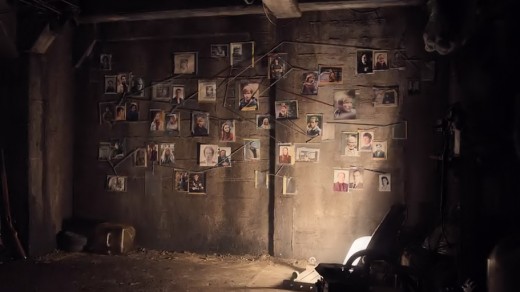
Lest viewers start pinning mugshots of the characters to their walls and linking them with string (as done above in the show itself), Netflix has taken the unusual step of producing an online guide. Oh yes, click on the link because that’s more necessary than ever as it’s sometimes really hard to remember who is who, or how anyone is related, which makes it hard to watch (though it’s impossible to stop watching).
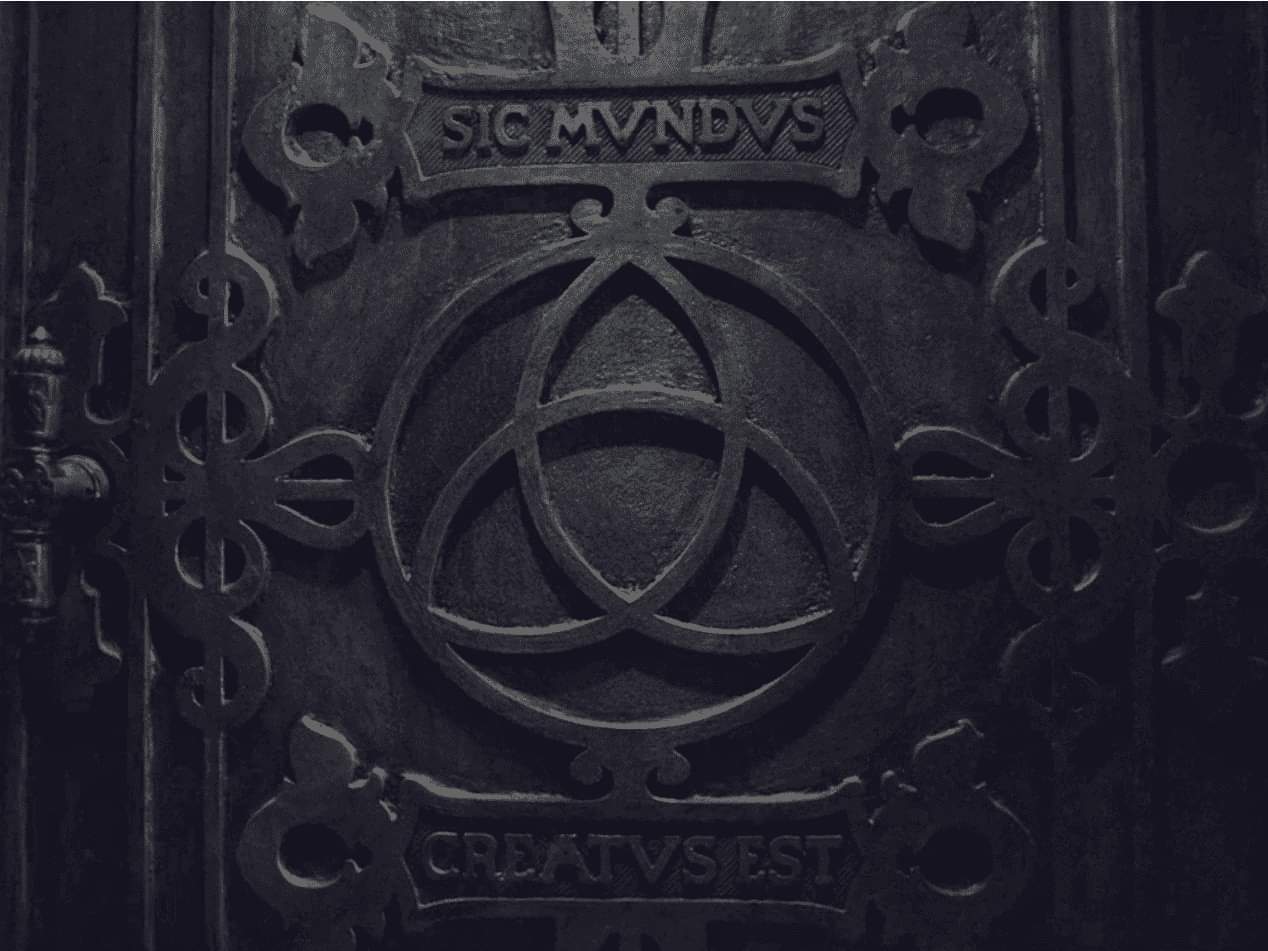
When the first season débuted, in 2017, the line on the series was that it was a German Stranger Things. The producers of Dark have welcomed the Stranger Things comparison largely as a selling point, but the series pretty quickly establishes its own distinctive rhythms, while planting the seeds of an ambitious, densely woven mystery. Like Stranger Things and The OA, Dark offers teen viewers the fantasy of events with global or greater importance depending on their own actions: a definitive nod to the complaint that parents and authority figures are all liars, but they’re lying about something significant. The nowhere-town of Winden is the battleground for the eternal struggle between good and evil, carried out against a background of endless rain, dead birds in boxes, mysterious horology, Latin inscriptions, and sinister priests, all of them being the product of the show’s excellent, creepy art direction.
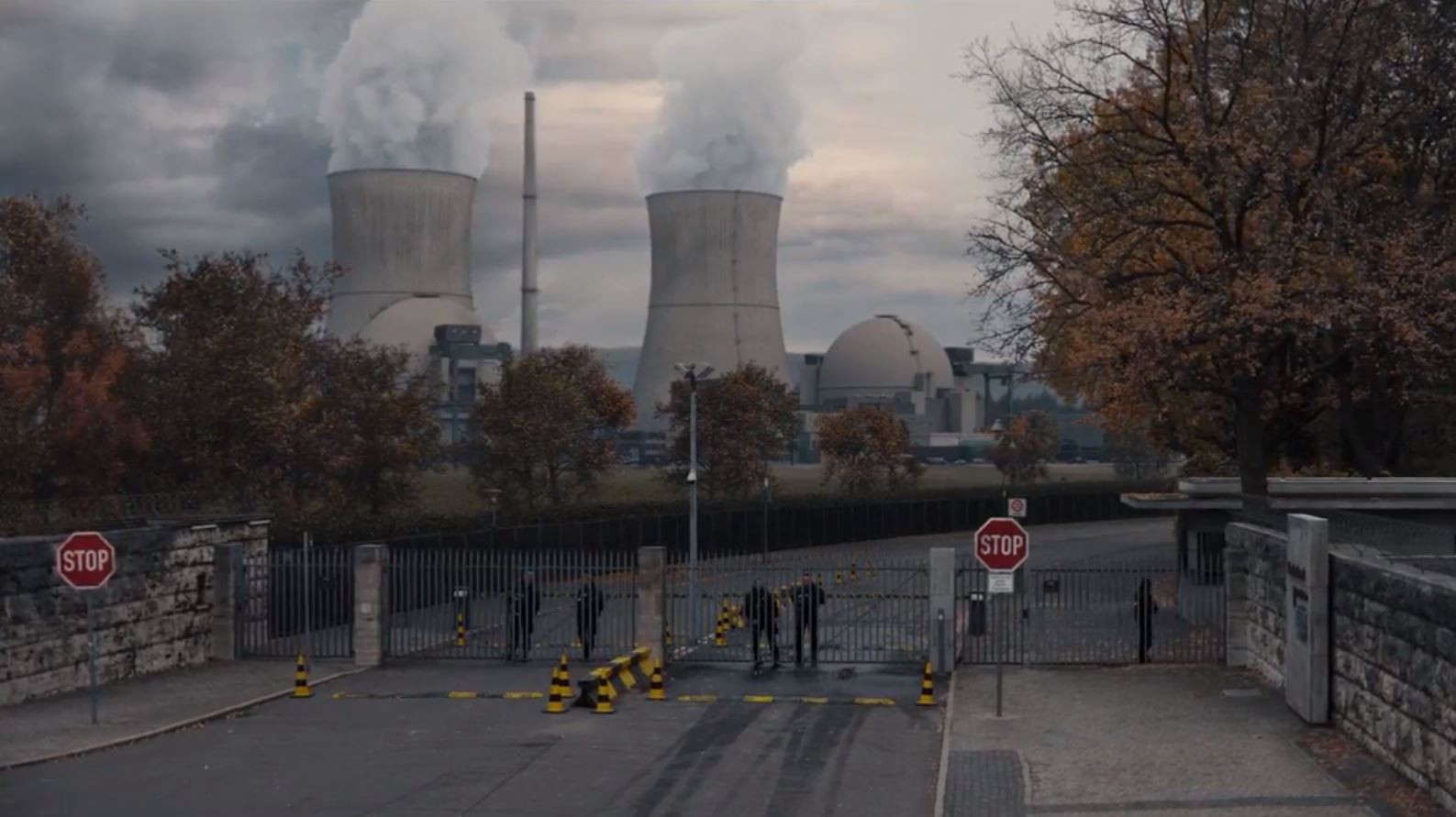
But the Stranger Things label is, frankly, a little reductive. Yes, Dark does involve a supernatural component and children going missing in a small town, but it also has larger, more existential themes on its mind, with a time-bending premise that links what’s happening in the present back to events 30 years before (and many more timelines to be uncovered gradually); and a soap-opera aspect, with plenty of complicated relationships in a community that, not incidentally, lives in the shadow of a nuclear power plant. The people involved are troubled, entangled and lonely. In that sense, Dark has far more in common with such series as The Missing and The Returned than it does with Stranger Things.
It also draws some comparison with the recently revived Twin Peaks, with which the show shares some tonal resemblance, it gives you a lot to keep track of with three generations of characters spread across two permeable time periods. Parents with teenagers in the 2019 segment are teenagers with parents in 1986. In both eras, perhaps more than coincidentally, a boy has gone missing.
The central essence of the show is time and the fundamental understanding it. The makers are not even coy about it. The series begins with an epigram from Einstein to the effect that the difference between past and future is nothing but a “persistent illusion.” Graffiti reads “No future,” and a significantly displayed book is titled “A Journey Through Time.” Scars, which at least three characters bear, are said to “sense rain… They can see into the future.” More than once we are told that the question is not “how” or “where,” but “when.”
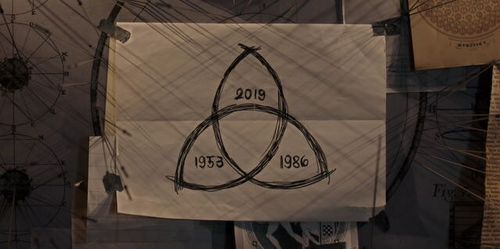
Time-travel in Dark occurs in increments of 33 years because the wormhole is only activated when the sun and moon align, a cycle of every 33 years. Season 1 begins in 2019 and travels back to 1986 and 1953. Season 2 begins in 2052 and travels further back than Season 1 to 1921. But time in Winden has not been at a standstill between seasons, and thus viewers will have to adjust to however much time has advanced during each of these cycles. There’s a reason for this advancement that creates more urgency to the story this time, which makes for a less meandering experience. Also, at least one more time period will be introduced, which creates a delicious sense of destiny throughout the generations.
Remember when Rust Cohle on True Detective said, “Time is a flat circle”? How quaint that sounds in comparison to the complex world in which Winden exists. Every time travel story has to set the parameters by which it can operate, and in the world of “Dark,” meeting a past (or future) self seems to be no big deal. Although the Grandfather Paradox is lightly touched upon (killing your grandfather in an older timeline thus eliminates your own existence), it’s never really harped on about.
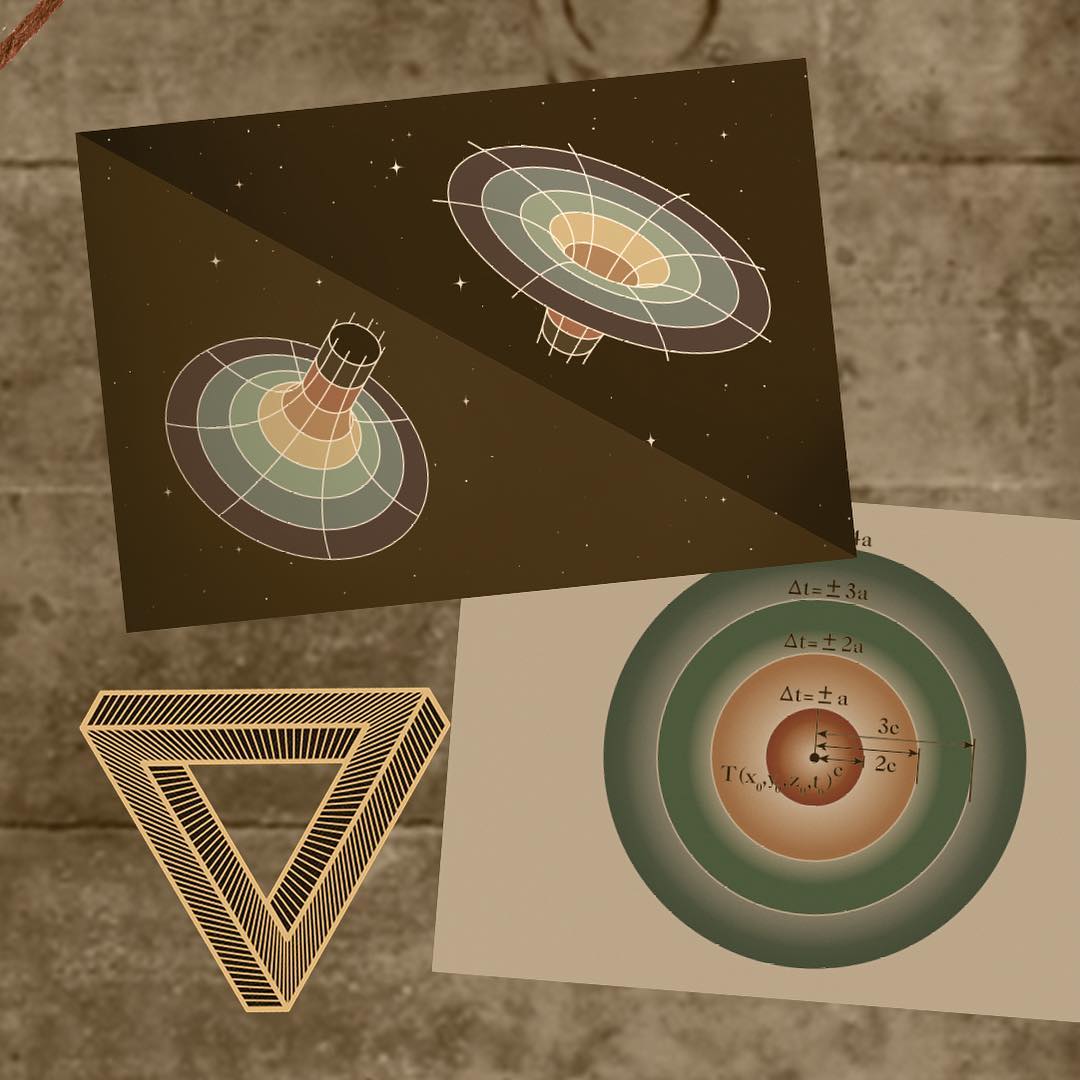
“Black holes are considered to be the hell-mouths of the universe. Those who fall inside disappear. Forever. But where to? What lies behind a black hole? Along with things, do space and time also vanish there? Or would space and time be tied together and be part of an endless cycle? What if everything that came from the past were influenced by the future?”
The second season introduces the Bootstrap Paradox or Causal Loop Paradox in which objects or information don’t have a clear origin of what caused them within the time loop. It’s a handy loophole that helps the viewer make sense of events in Dark that really don’t make sense. To go back to Rust Cohle, he’s speaking about Nietzsche’s Doctrine of Eternal Recurrence, the idea that events from the past and the future will recur again and again infinitely. Season 2 leans far, far into this concept, even repeating this explanation ad nauseam perhaps to illustrate the concept through dialogue in addition to driving the idea home.
“What we know is a drop; what we don’t know is an ocean”.
You might find yourself lost while watching Dark. Some of that has to do with the fact that the series is in German, and so you’ll probably need to read the subtitles to follow along (you have an English-dubbed version, but as always I would recommend going with the original audio). But it’s also because of the intricacy of the plot, which centers on a handful of families in this fictional town, whose secrets and betrayals unfold in the course of multiple timelines, going back to 1921 and forward to a post-apocalyptic future in 2052. There’s time travel, nuclear physics, Christian mysticism, and good old teen drama – each sub-plot having their own significance and worth. The show not only bends time, but also our minds.
The makers have scattered various clues across plotlines (even timelines) and you will be engulfed in collecting them as small pieces of a puzzle. Just when you think you have solved it and you look up for a few seconds to cherish how beautiful a gripping whodunit can be, you realize that the one you just solved is in turn only a tiny piece for another bigger puzzle.
Part of the reason the series is so effective in its handling of a narrative that could very easily collapse under its own weight, is its score by Ben Frost. His motifs add terror when there should be none, subvert expectation and add one of the most crucial layers.
“When you are watching a character as a child, as an adult, and as an old woman, in 3 separate scenes, sometimes cutting back and forth rapidly, the score is actually pretty crucial in holding you on course and helping to glue that story together. When it comes down to it, I want to stay with characters, in an emotional space that exists outside of time. “
Ben Frost, when asked whether it was a challenge to compose the soundtrack for the show, as it takes place across so many different time periods, from the 1920s to the 2050s.
The opening credits (a montage of clips resembling a Rorschach inkblot test) became more mesmerizing with each viewing as the characters were explored more and more. The way the credits’ visuals are split into halves and thirds cleverly ties into the splintered timelines of the show. It’s beautiful, and rather than skip through the credits (with a convenient one-click option on Netflix), you will want to watch them each time, hypnotized by the shifting imagery, and mesmerized by Apparat’s “Goodbye” theme in the background.
True to the show’s title, the first season takes place in cloistered rooms and pitch-black caves, with the motif of soaked northern forests bringing to mind all those sober, rainy days on The Killing, another show about missing children and buried secrets. The new season, however, is largely set in bright sunlight, giving the eerie feeling, similar to that of HBO’s Chernobyl, that terrible things, atomic or otherwise, are happening, invisibly, right before your eyes.
Hopefully, the series’ creators, Jantje Friese, and Baran bo Odar have figured out how to untie all the knots that they have so skillfully tied in the two seasons. Production of the third and final season is underway (which is going to explore the concept of the multiverse) and they’ve promised a clear resolution. Regardless, recent television (True Detective, Game of Thrones) has proved that devoting too much mental energy to predicting a show’s next step or deeper meaning may be effort misspent. Apparently, most of the recent series finale had left us disappointed. Perhaps the best way to enjoy Dark is just to let it pass over you.
Perhaps Dark is the ultimate vehicle to illustrate the flat circle of recurrence as one season can flow into the next and back to the beginning…
“The distinction between the past, present, and future is only a stubbornly persistent illusion.”

 The Film Reel