
When the opening chapter of a Stephen King book starts with a six-year-old talking to a clown who lives in a sewer, chances are things are going to take a turn for the worst. King’s book was bifurcated into halves, one hefty chunk going to its 1950s preteens living in a fictional Maine town, and the other to these tiny warriors grown up into equally haunted ’80s adults.
This horror masterpiece was initially adapted in a 1990 American mini-series directed by Tommy Lee Wallace and adapted by Lawrence D. Cohen. And exactly 27 years later, Pennywise the clown resurfaced in the town of Derry, Maine; this time as a feature film. 2017’s It: Chapter One became a huge phenomenon (quite unexpectedly). It was so huge that it eventually became the highest-grossing horror movie of all time!
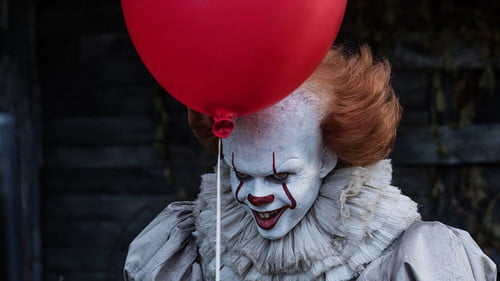
It: Chapter Two follows its source material, but the movie doubles down on the deeper, metaphorical nature of losing one’s innocence and discovering a world full of real-life pain. Disturbingly (and boldly), the film opens with the murder of Adrian Mellon, a gay man played by renegade queer Canadian filmmaker Xavier Dolan (I Killed My Mother). Based on the real-life 1984 drowning of Charlie Howard, a young gay man viciously attacked in Bangor, Maine, the sequence shows teens gay-bashing Adrian and then throwing him off a bridge into a canal. It’s then that the menacing red balloons reappear like autumn leaves, signaling the reappearance of Pennywise.
It’s up to an older, lonely Mike (the only one of the bunch to stay in Derry) to reunite “The Losers” and remind them about the oath they all took to protect Derry if It comes back ever again. They’d all gone their separate ways and carved out vastly different lives. But returning to their seemingly idyllic small town instantly revives their old rhythms and relationships.
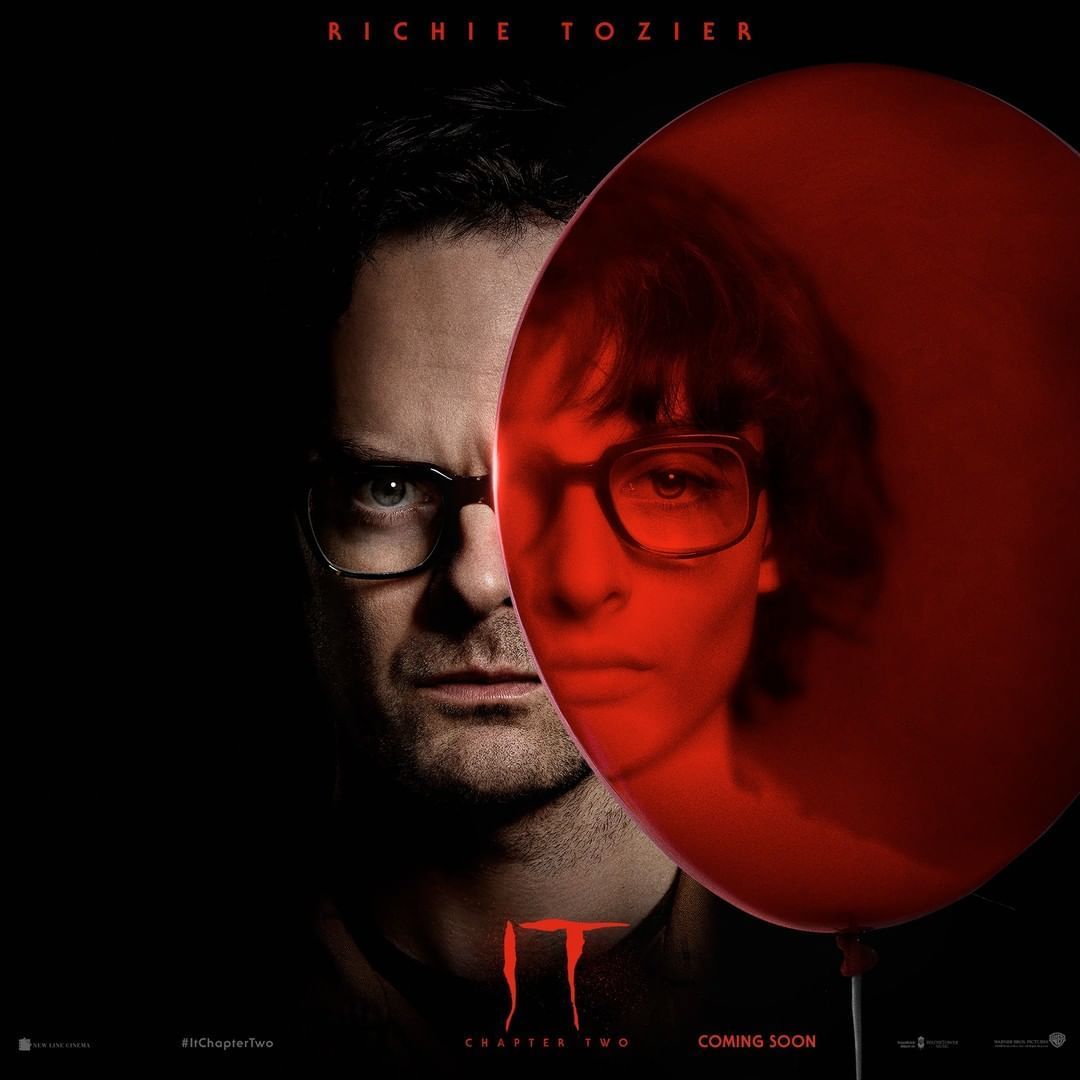
Mike Hanlon (Isaiah Mustafa as an adult, Chosen Jacobs as a child) is the librarian’s assistant and self-styled historian living in the clock tower. Bill (James McAvoy/Jaeden Martell) has gone on to become a novelist whose latest book is being adapted into a film, one of several meta bits scattered throughout (the joke is a reference to King’s reputation for delivering sub-par endings to great novels). Beverly (Jessica Chastain/Sophia Lillis), who endured a controlling, abusive relationship with her father, is now in a controlling, abusive relationship with her husband. Richie (Bill Hader/Finn Wolfhard) is a hard-drinking, trash-talking stand-up comic who’s as acerbic as ever. Eddie (James Ransone/Jack Dylan Grazer) remains a neurotic hypochondriac who’s married to a woman who looks and sounds an awful lot like his smothering mother. And Ben (Jay Ryan/Jeremy Ray Taylor), who was both the poet and the brains of the group, shed his baby fat and transformed himself into a hunky, wealthy architect.
Just as the ending of the first film foreshadowed, though, the kids who escaped the villainous grasp of the evil clown Pennywise during the summer of 1989 have found themselves back in Derry, Maine—right on cue, 27 years later, to fight him again.
As in the original, It Chapter Two works best when the members of the self-proclaimed “Losers Club” are bouncing off each other, their banter infused with a sparkling mix of humor, insecurity, and camaraderie.
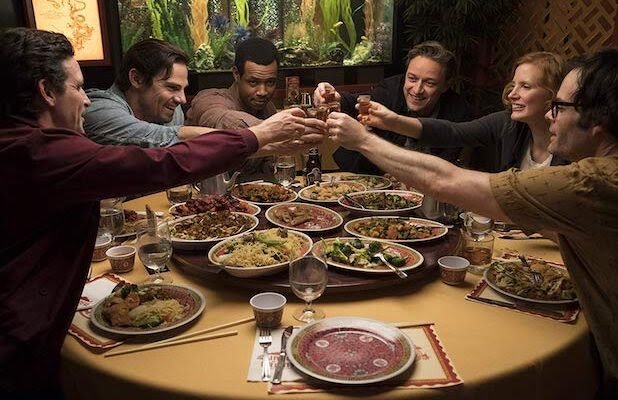
Unfortunately, Muschietti and Dauberman spend a lot of their time keeping their perfectly picked actors apart on individual adventures, which drags out the drama and slows down the momentum.
The members of the “Losers Club” must spread out across town and find totems from their youth as part of a ritual to purge Pennywise from existence; they do it at Mike’s insistence, part of the Native American subplot that also exists in the source material. It is a distraction; excising this element of the story would have made the film as a whole leaner and stronger. But while separating the characters significantly lengthens the running time, it also results in individual moments of insane terror, most notably the expertly staged and paced scene in which Beverly revisits her childhood apartment.
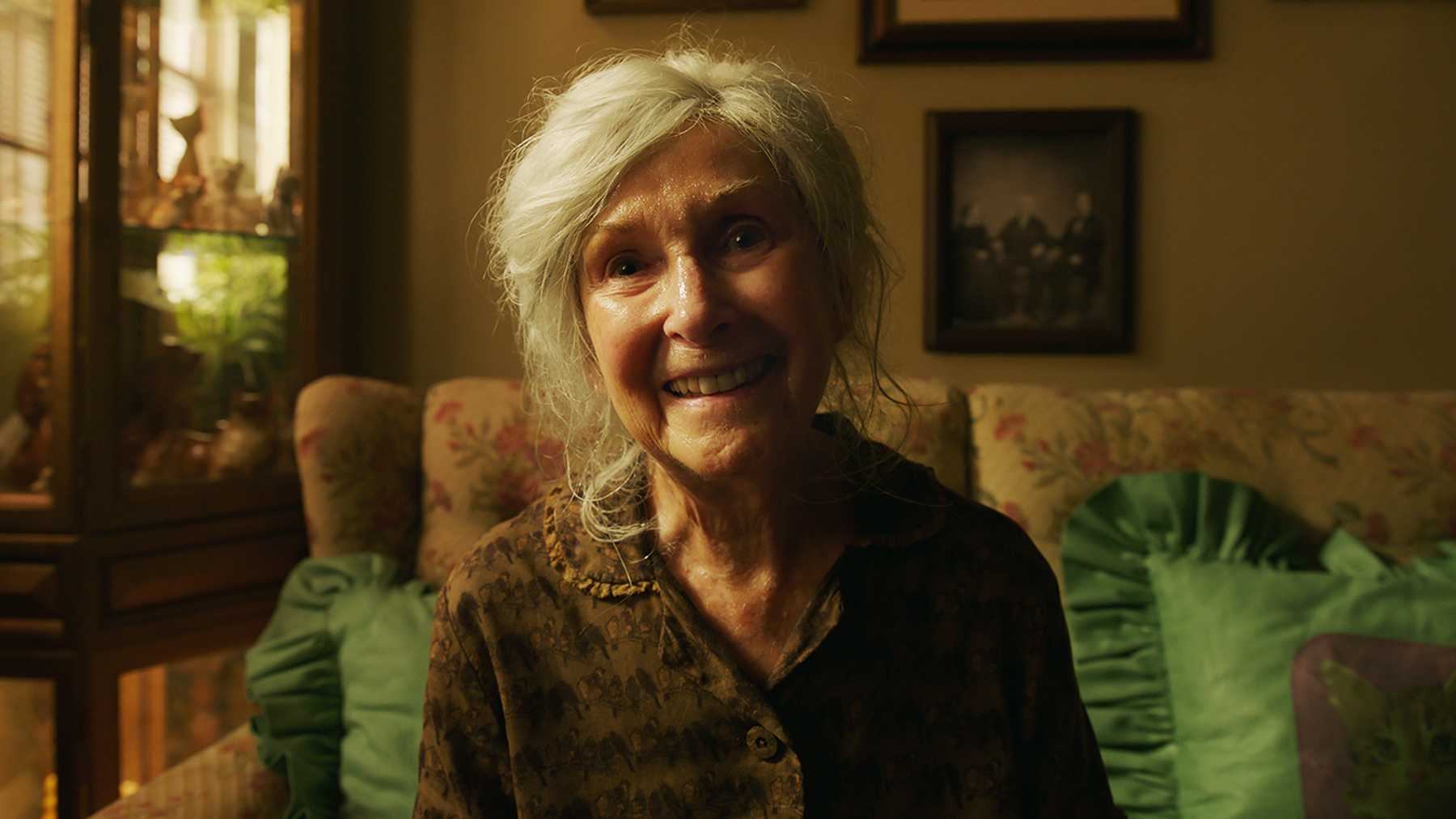
This is probably the best and the scariest sequence in “It Chapter Two” is also one of the simplest. This is the scene that Warner Bros. released as the movie’s teaser trailer (though they didn’t reveal the scariest bits). Chastain’s Beverly goes back to her childhood home, where she is greeted by an elderly woman named Mrs. Kersh (Joan Gregson) who insists on inviting Beverly in for tea. Beverly looks around a bit, and when she sits down for the tea, Mrs. Kersh’s face seems to freeze slightly, as if she has begun to somehow malfunction. Muschietti seems to have realized that what Gregson is able to do with it her face here, as a performer, is much more frightening than anything he might be able to do with a special effect.
And this realization extends to what happens next when Beverly finds herself trapped in a hallway with Skarsgård’s Pennywise sitting down at the end of it. Pennywise is without his usual makeup, and he wears her father’s clothes and hair.
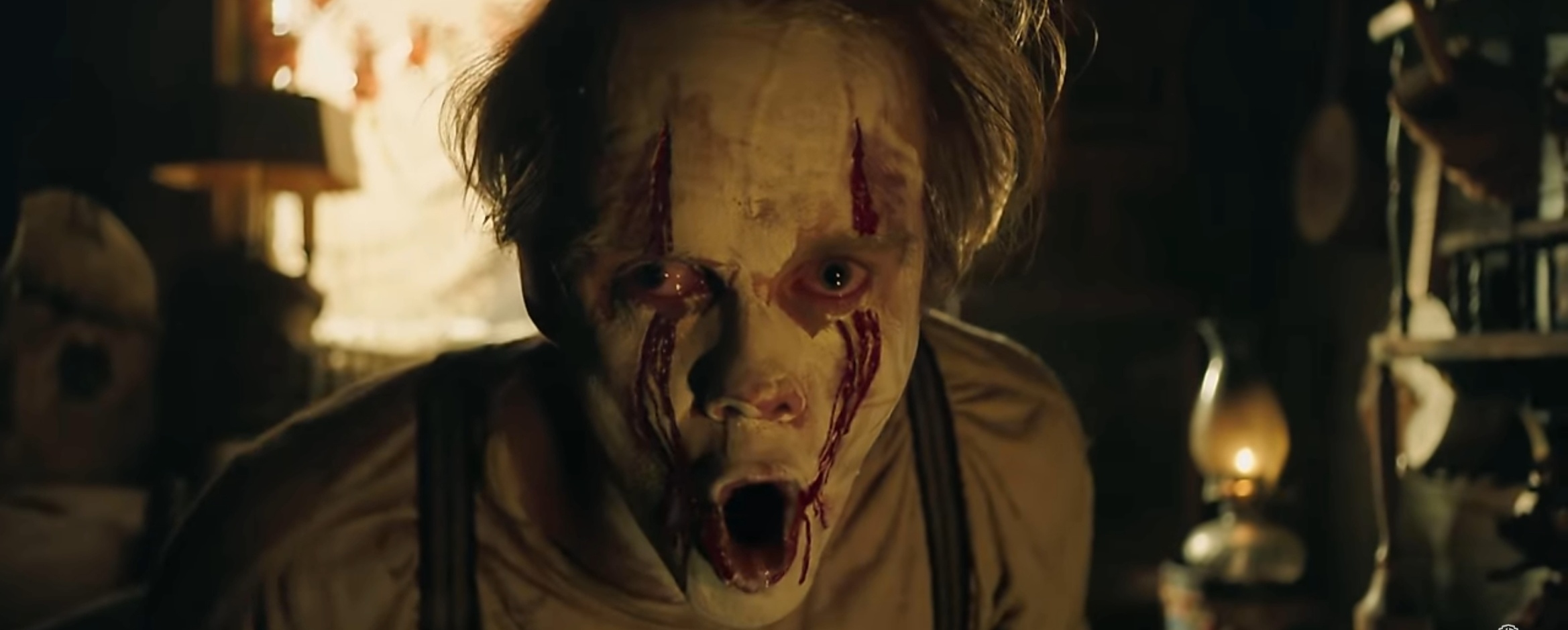
He becomes Beverly’s abusive father here and speaks to her as her father until he starts to put on his clown make-up, and this is far more frightening as a visual idea than all of the other set pieces in this movie involving very elaborate and expensive-looking effects of insects with human faces and large statues that come to life.
This is what stands out in It Chapter Two. It’s not the clearly labored-over insect effects but that moment with Mrs. Kersh and the scene of Pennywise as Beverly’s father — both reliant on actors rather than technical wizardry.
Returning director Andy Muschietti did an effective job with his young cast in the first It (they all come back in flashbacks or nightmares, including standout Sophia Lillis as teenage Bev), but his work with the adults is superior. In the wake of Hereditary’s Toni Collette, we’re evidently in a brave new world where the heightened emotions of horror can yield finely frayed performances, especially by Bill Hader (including one targeted expressly at fans of John Carpenter’s The Thing).
The movie does a beautiful job of bridging its natural and supernatural elements. And given that his film stretches nearly three hours, Muschietti gets more than ample opportunity to display the elegance to his craft. In introducing us to our main characters as adults, Muschietti makes some gorgeous transitions that are smooth and inventive (this is the point when I got hooked on to the film). It Chapter Two can be a sprawling mess at times—overlong, overstuffed and full of detours—but its casting is so spot-on, its actors have such great chemistry and its monster effects are so wildly ghoulish that the film keeps you glued to your seat. Moreover,

Pennywise has stayed the same all this time—and Bill Skarsgård’s deeply creepy presence is sorely missed when he’s off-screen. With a performance that’s as physical as it is verbal, he consistently manages to find that sweet spot between being terrifying and hilarious and gives us the right dose of coulrophobia. He’s created an iconic horror villain for the ages. But the rules seem to be ever-changing as to what Pennywise can achieve with his supernatural abilities. He knows what scares these characters, even as adults, which often manifests itself in strange, vivid ways. It’s the stuff of nightmares, even when they’re wide awake in broad daylight. But his omniscience and omnipresence tend to vacillate, and the collaborative power that ultimately challenges him isn’t too different from what we saw in the climax of the first movie.
Muschietti also relies on jump scares on too many occasions, which feels unnecessary given how much creative energy was spent on developing genuinely grotesque and horrifying visuals. Finally, there are a number of moments when Pennywise could easily dispatch important characters and doesn’t, simply because if he did, the movie would be over.
When you adapt an 1100-page novel to a feature film, a lot has to be decided on what to keep and what to cut. One such decision that must be lauded is to include the hate crime that was wrongly eliminated in the 1990 miniseries production of King’s novel. King’s “It” takes the conception of evil very seriously and follows it to the most primal conclusions. Pennywise is strong because he lives on the fear of his victims, and he plays on weaknesses without mercy, like the worst kind of bully. The evil of Pennywise is linked to the evil of the homophobic gay-bashers and of Beverly’s violent husband, but this is never simplistic. Dolan’s Mellon is not at all afraid of the bigots who kill him, while Beverly is not so much afraid of her husband as numb to him. At its best dealing with the horrors of everyday life and our mutual responsibility to end them, It: Chapter Two challenges us to see the worst in ourselves, which can be truly terrifying.
There are nifty cameos from Peter Bogdanovich (as a silkily ruthless director) and one from King himself. The 71-year-old author plays the owner of a store that sells second-hand goods. In the book, said proprietor is gay and wears a fishnet tee-shirt. Alas, as played by King, the man is sensibly dressed. He’s still good value, however, a creepy cross between Mick Jagger and John Major, all bright eyes and gloating spite. “You can afford it,” he says, repeatedly, to Bill (James McAvoy), now an acclaimed mystery writer with ties to Hollywood. Lots of people detest King (they view him as an overpaid member of the liberal elite). If this cameo is anything to go by, their resentment is something he “gets”.
It doesn’t leave room for a sequel, which is a good thing. Combining the two movies, there’s a clear beginning and ending, and if the latter isn’t as strong or promising as the former, at least the entire story is told. Considering the challenges associated with adapting the second half of the novel, the filmmakers have done an adequate job – which probably is all that’s needed to make Chapter Two a major box office success. It is a fitting sequel, deliriously entertaining, and nostalgic to the fans of this world created by the King of Horror and to all horror buffs in general.


 The Film Reel